
It's a common sentiment among readers that web and light novels are generally not as refined and well-written as traditional novels. Much of this is because anyone can write and publish them, unlike traditional novels, which go through a strict vetting process for only the cream of the crop to see the light of day.
However, occasionally, you’ll see a title that even puts professionally edited and polished traditional novels to shame. The prime examples of this are Shadow Slave, Reverend Insanity, Lord of the Mysteries, Omniscient Reader’s Viewpoint, The Beginning After The End, and last but by no means least, Re: Zero.
Unfortunately, Grimgar of Fantasy and Ash is nowhere near their level. Despite having a well-liked one-season anime adaptation that attracted a large number of readers due to its beautiful art style and character chemistry, Grimgar was unable to hook readers long-term.
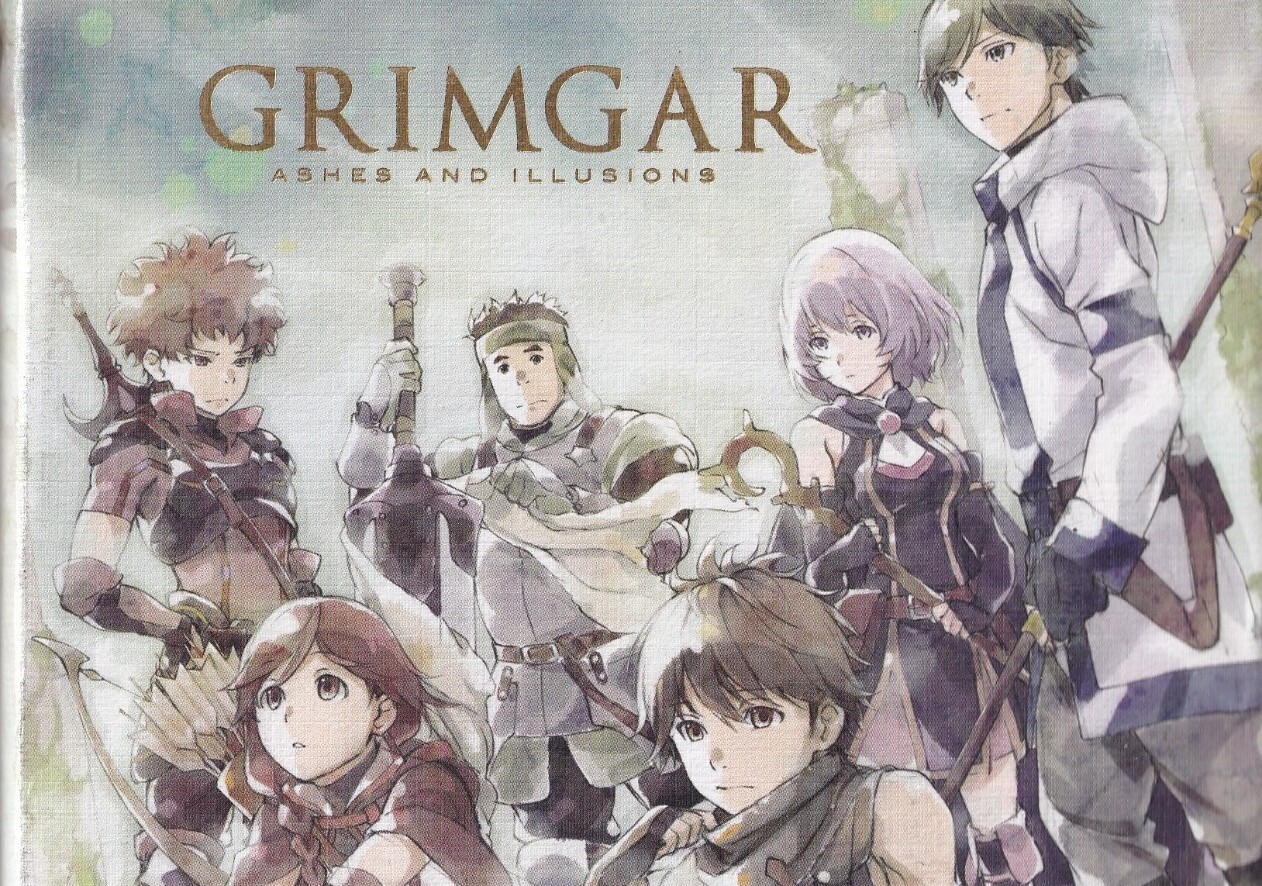
A critical factor in its downfall is author Ao Jyumonji’s inconsistent writing, with a plot that is unfocused and scattered. He has admitted on several occasions that he’s not someone who ever plans out his novels. He simply makes things up as he goes.
This doesn’t just go for Grimgar, it goes for my other novels as well, but I don’t do much planning before I write. This time, in particular, it wasn’t just that I didn’t do much planning, I did none at all. When I first started writing, even I had no idea how things were going to turn out, and where we would end up. [1]
In the writing world, this type of author is what we call a “pantser” — someone who doesn’t plot the novel and only has a vague idea of what he wants to write. The exact opposite of this is a “plotter” who knows exactly how the story is going to start, climax, and end. A plotter knows when and where characters will be introduced, what arcs there will be, and how the story is going to progress. This results in tight, intricately written novels that rarely fail to impress readers. It also allows for natural foreshadowing — something that’s highly rewarding for readers. Shadow Slave and Omniscient Reader’s Viewpoint are the best examples of these. In traditional novels, we have Harry Potter. J.K. Rowling once said that she had planned out all seven novels in the series before she began writing, and it’s evident from all the foreshadowing and plot twists.
From the start I knew there would be seven books and I had the whole story plotted out early on. [2]
To put it simply, plotters know exactly what to write, and since they have a strong sense of direction for the story, the reader can enjoy their writing with peace of mind. A pantser, on the other hand, lacks narrative direction. They’ll constantly derail it and veer off into irrelevant tangents whenever they please, dragging readers with them on wild rides they might personally consider joyful, but in reality, they're just annoying. Ao Jyumonji defends this by saying that this is the only way to write an untainted story, but even if that is the case, that doesn’t change the fact that the readers who were there for the characters and the world felt cheated of what they were promised as the story progressed.
Being a pantser doesn't necessarily equate to being a terrible writer. Stephen King, George R.R. Martin, and Agatha Christie are just a few of the famous writers who are pantsers. Unfortunately, it seems like Ao Jyumonji only has the most disliked trait of pantsers — being directionless and noncommittal.
His lack of commitment to the story is evident from how he changed his tune in the afterwords as the new volumes were released. In the afterword of volume 7, the author states that he has plans for how the story is going to end.
I will say, I do have some idea in my head of where I want things to end up. It’s all up to them, though, so it’s possible they may arrive somewhere else entirely, but if that happens, it happens. [3]
Despite his tactful wording hinting at the possibility of the story going off-road, fans like me couldn't help but keep their hopes up for a good ending, given the first sentence in which he discloses that he does have an ending in mind. If only we knew how he would go back on his own word down the line. In an interview [4] on November 12, 2023, the author revealed that he has no idea what to do with the series. He believed he could conclude it in three volumes if he went with the ending he originally had in mind, but didn't want to because fans might want to read the story for longer. He makes it seem like he wants what's best for the readers, but what happens next is in complete disregard of the readers' wishes.
In volume 21, not only is there a timeskip of a hundred years, no one apart from Haruhiro remains in the story. Even that would've been acceptable, considering Grimgar has always been a grim series, but the one intolerable thing the author did was to introduce an entirely new protagonist and cast, completely sidelining Haruhiro.
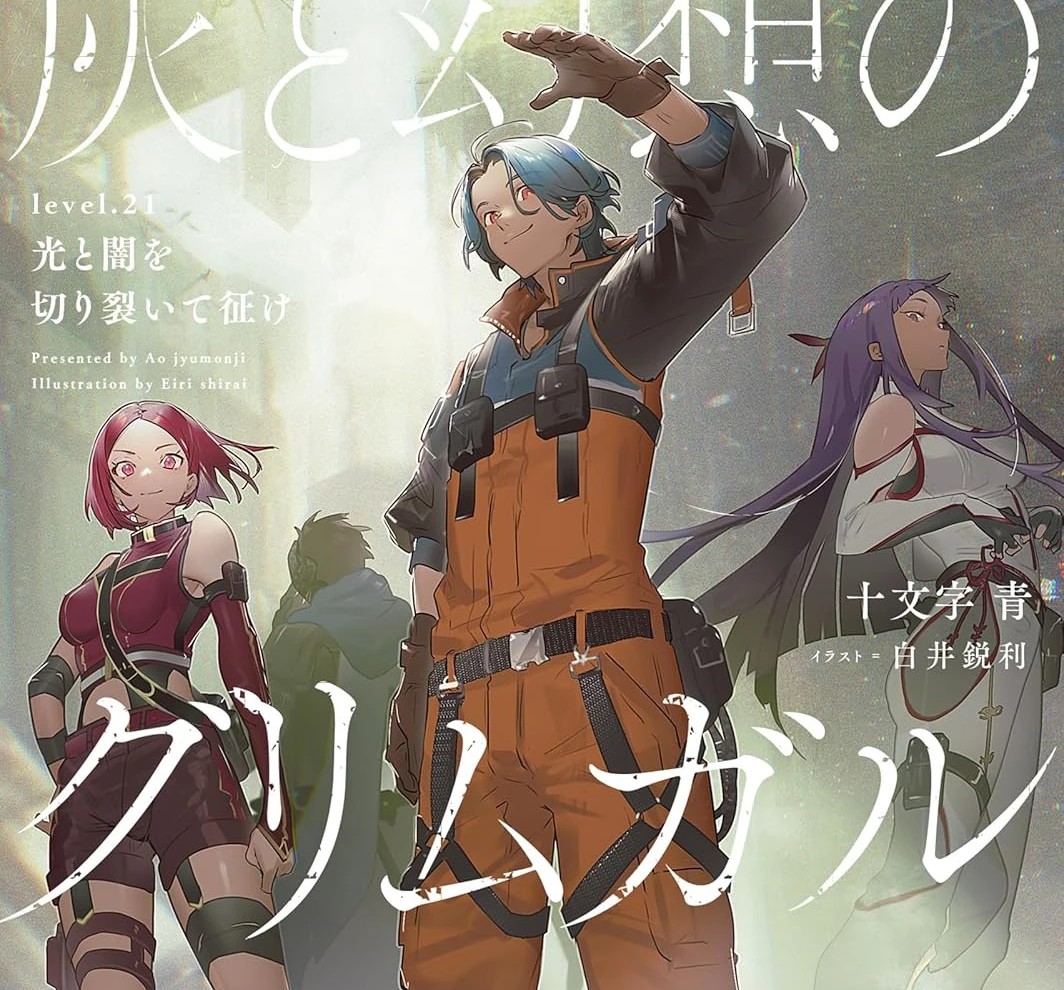
Normally, something like this wouldn't have seen the light of day because this is where a series' editor and publisher come in. A competent editor would've instantly seen that this decision of the author would not only alienate a vast majority of the fanbase but would also effectively ruin the series. A competent editor would've advised him against it. Emphasis on competent, because as it turns out, this was the time where Ao Jyumonji got a new editor - a young editor who was onboard with his drastic 180 of the series.
Coincidentally around this time, I was reassigned to a young editor. When I shared my idea to him, he was onboard with my plan. [4]
In the same interview, he also mentioned that his publisher doesn't bother him with anything about the story. He never pushes for another volume or enforces deadlines, probably because the series was never that big to begin with. The author admitted that he thought it was going to get axed early on.
It seems like Grimgar is a series that was neither great enough to be a mainstream hit nor mediocre enough to be axed. It just exists and sells. It's a series that, just like numerous others in the industry, has an interesting premise but is a victim of incompetence and noncommitment. Just another entry in the long list of novels that are the definition of wasted potential.
References
Afterword of Volume 9 - Here and Now, to Far Far Away
Afterword of Volume 7 - The Rainbow on the Other Side